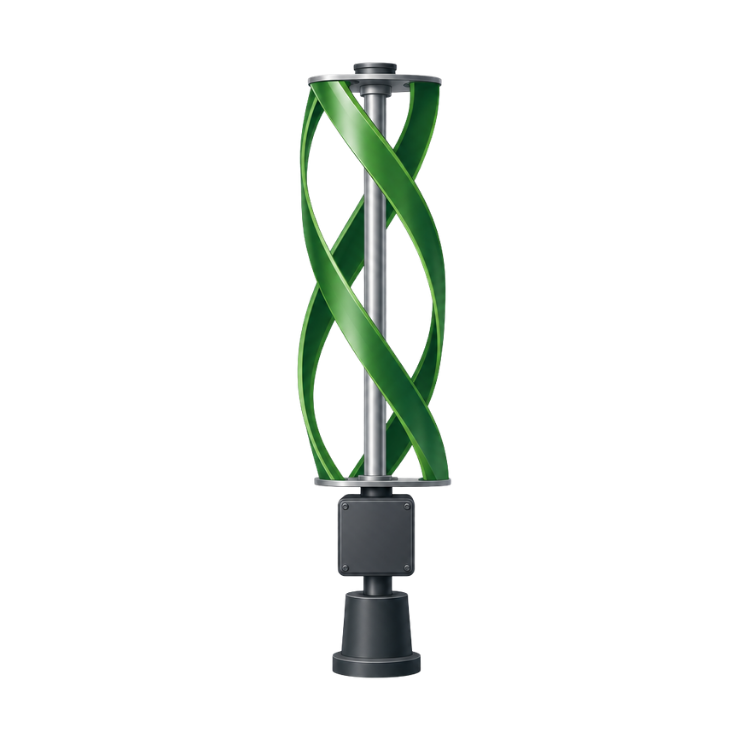
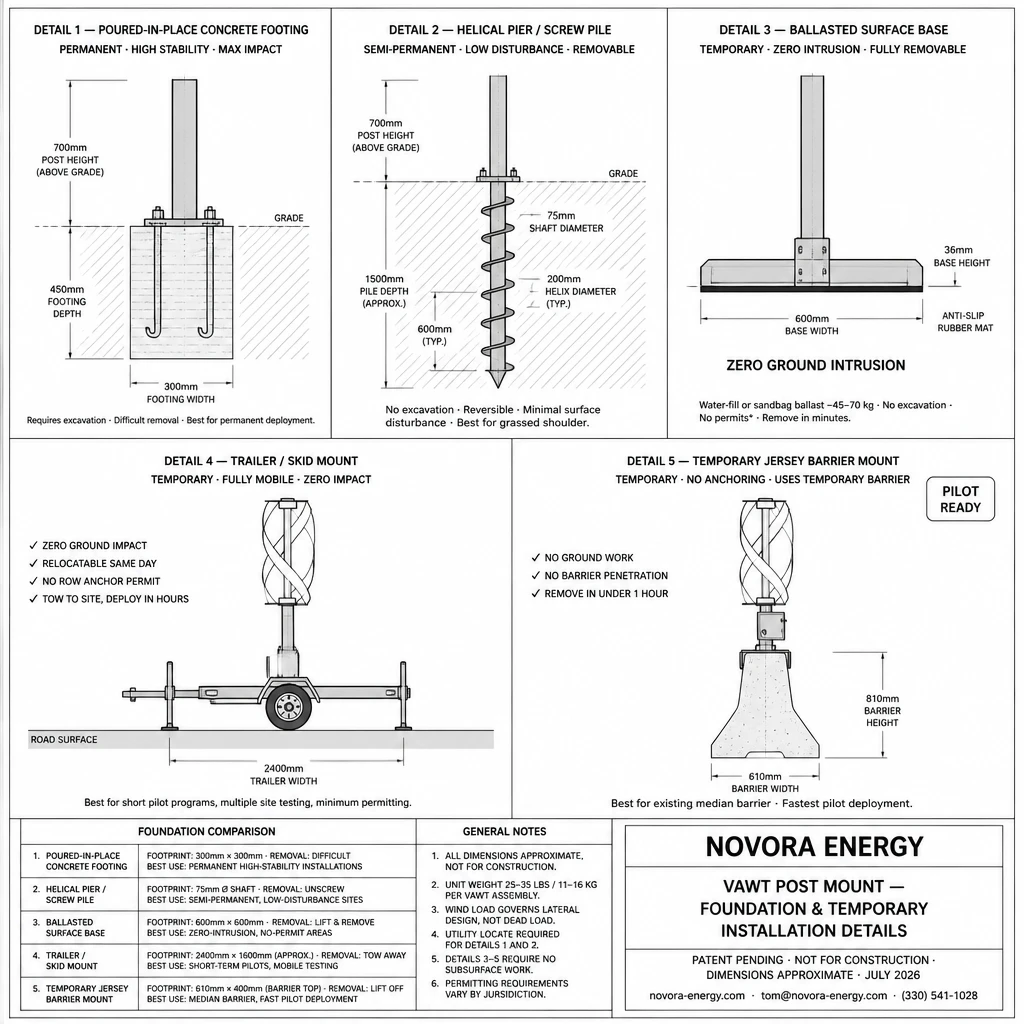
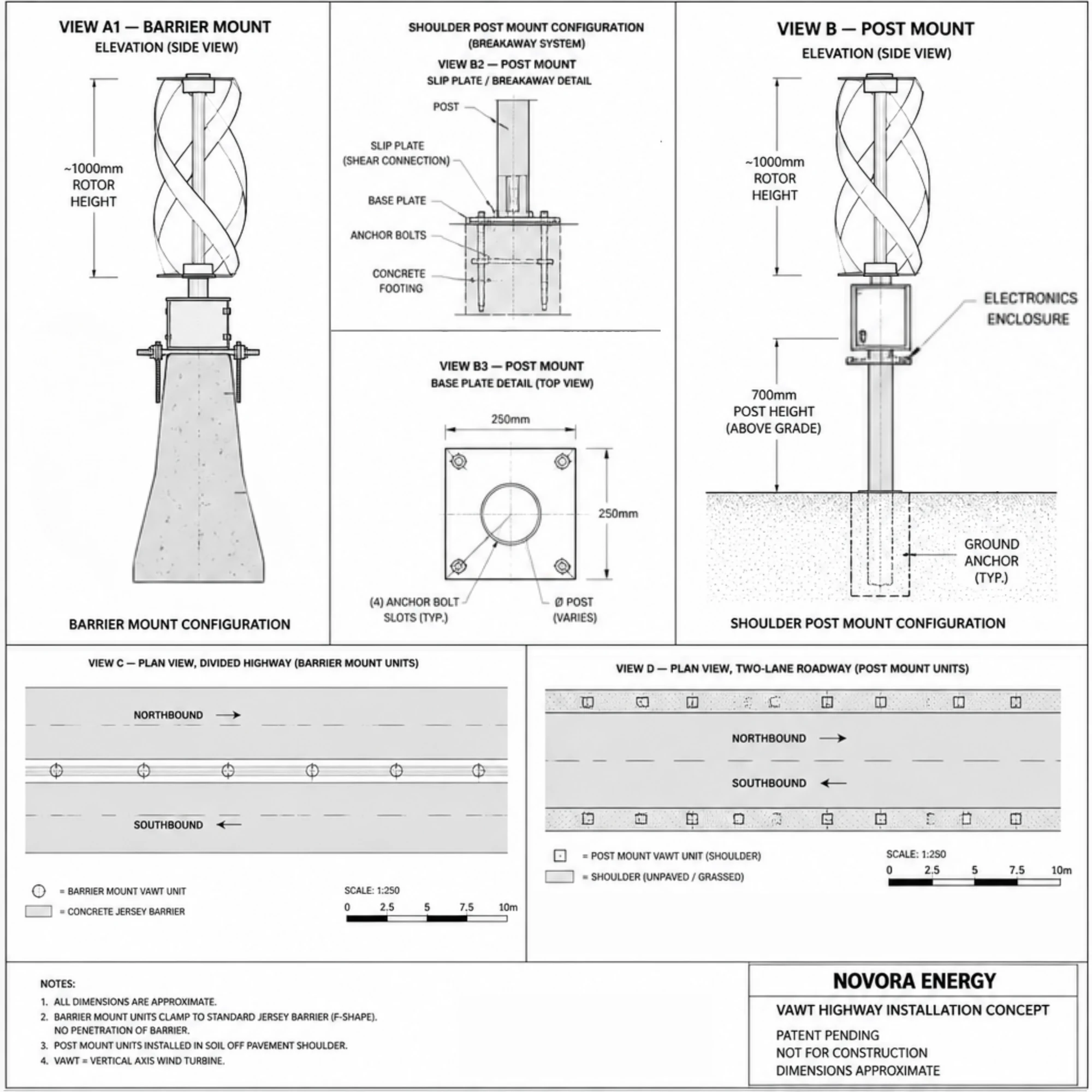
Novora captures the aerodynamic wake energy of highway vehicle traffic and converts it into grid-connected electricity, turning existing infrastructure into distributed clean energy.
Every semi-truck at highway speed displaces enough air to power a home. We built a turbine designed to capture exactly that.
Every vehicle at highway speed creates a powerful turbulent wake, a persistent, multi-directional wind pattern radiating from the travel lanes. A single semi generates wake comparable to a sustained 40+ mph wind event.
Our vertical-axis turbines are engineered specifically for chaotic, multi-directional wind, capturing energy from any direction simultaneously. Unlike horizontal-axis turbines, no alignment with a primary wind source is required.
Energy is conditioned and fed directly into the existing grid through standard utility interconnection. No new land acquisition. No environmental permitting beyond existing ROW accommodation frameworks. No disruption to traffic.
State DOTs earn a share of electricity revenue from power purchase agreements, transforming highway ROW from a cost center into a revenue-generating clean energy asset.
State DOTs are under growing pressure to find new infrastructure revenue streams. FHWA guidance already enables DOTs to lease highway ROW for renewable energy generation, our model turns that policy into a reliable income stream for transportation agencies while delivering clean energy to the grid.
Data centers represent a second major customer class. With Trump's "bring-your-own-power" mandate pushing hyperscalers to self-generate, highway-adjacent distributed wind offers a compelling on-site or near-site clean energy source, deployable without land acquisition or permitting delays.
Novora is the only energy technology that deploys on existing infrastructure, connects to the grid at the point of generation, and requires no new land.
| Attribute | Novora | Wind | Solar | Hydro | Nuclear |
|---|---|---|---|---|---|
| Easy grid connection | ✓ | ✗ | ✗ | ✗ | ✗ |
| Easily scalable | ✓ | ✓ | ✓ | ✗ | ✗ |
| Low community opposition | ✓ | ✗ | ✗ | ✗ | ✗ |
| Predictable & available | ✓ | ✗ | ~ | ✓ | ~ |
| Short construction timeline | ✓ | ~ | ~ | ✗ | ✗ |
| Utilizes existing infrastructure | ✓ | ✗ | ✗ | ✗ | ✗ |
✓ Yes | ✗ No | ~ Partial | Based on typical large-scale deployment characteristics
Multiple independent forces are converging to make highway wind energy commercially inevitable.
AI-driven demand has pushed grid capacity to its limits. Hyperscalers are now mandated to bring their own power, creating an urgent new customer class for distributed generation adjacent to highway corridors.
Federal Highway Administration guidance now explicitly supports renewable energy generation within highway rights-of-way, enabling State DOTs to enter lease and PPA arrangements without new legislation.
$5B in NEVI funding is deploying EV charging along every major U.S. highway corridor. Each charging station needs power, and Novora's turbines sit exactly where that infrastructure is being built.
Novora's vertical-axis turbine geometry and array configuration methodology are covered by a provisional patent filing, a first-mover IP position in a space with no direct commercial competitors.
Ontario's clean energy mandate and MTO's highway innovation programs make Toronto-area corridors a natural second market. NRCan's Energy Innovation Program offers C$500K–$4M for demonstration projects.
DOT SBIR ($200K), NSF SBIR ($305K), and DOE SBIR ($200K) create a $700K+ non-dilutive runway, enabling meaningful de-risking before any equity raise.
We're actively building partnerships with State DOTs, utilities, data center operators, IPPs, and investors. Whether you're looking to pilot, partner, or invest — let's talk.